
Cherry on Top
When Life Gives You Cherries, Eat Them.

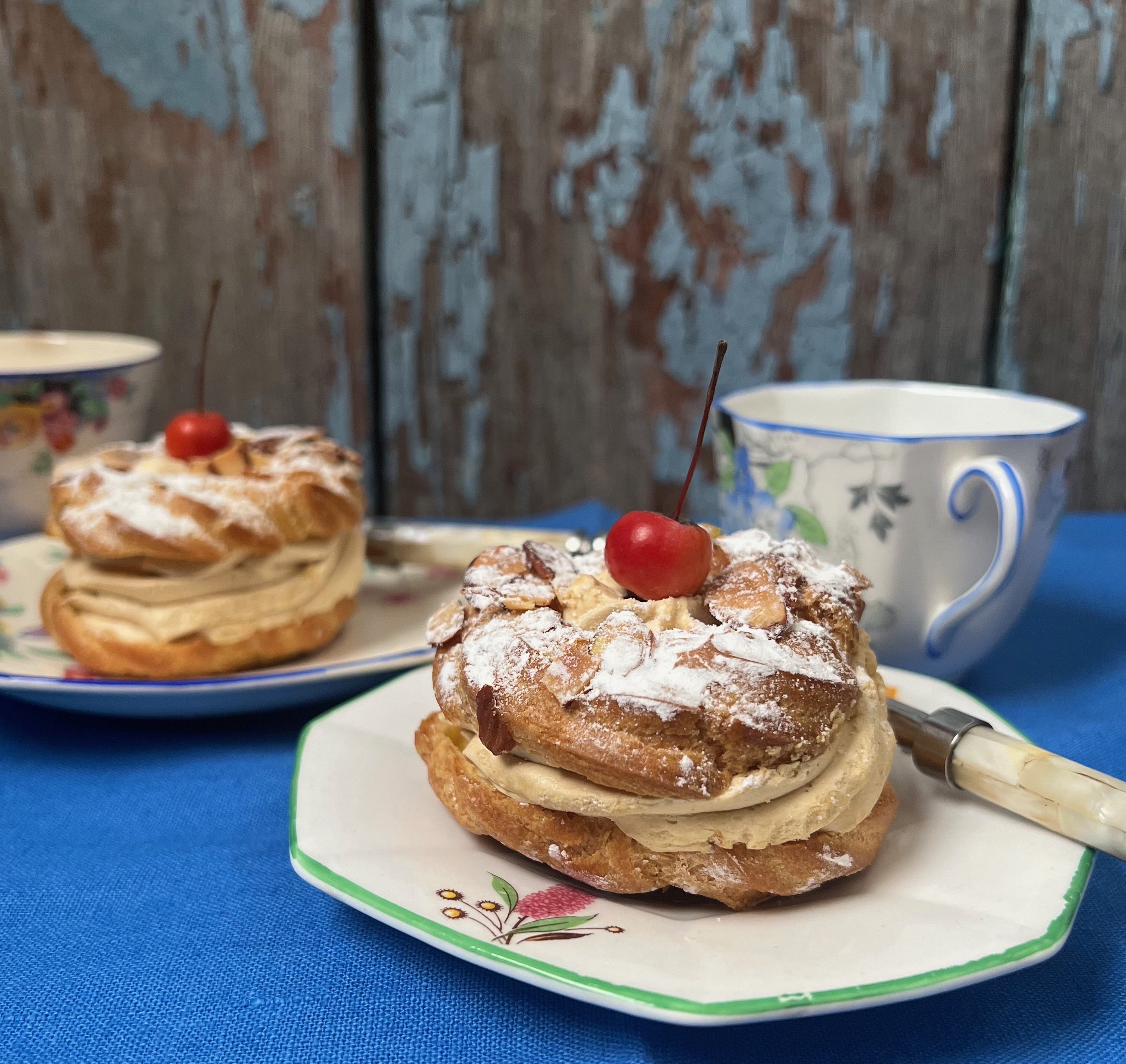
Cherry on top makes something that is already good even better, (almost) perfect.
What (Some) Children Read
When I was a child, my nono (grandfather) received a daily paper. On Fridays, it included a special insert for children, filled with comics and, on the last page, a rubric titled Did You Know?
For someone (like me), who devoured books and spent hours reading encyclopedias and dictionaries (I quickly graduated from children’s versions to the big tomes.), this section was almost as exciting as the comics. Yes, I loved the comics but Did You Know? was different. There was a thrill in asking the grown-ups countless questions afterwards or finding connections among the facts.
If you think you know everything about cherries, use this DYK list to quiz yourself or someone else. It could even be a game to play.
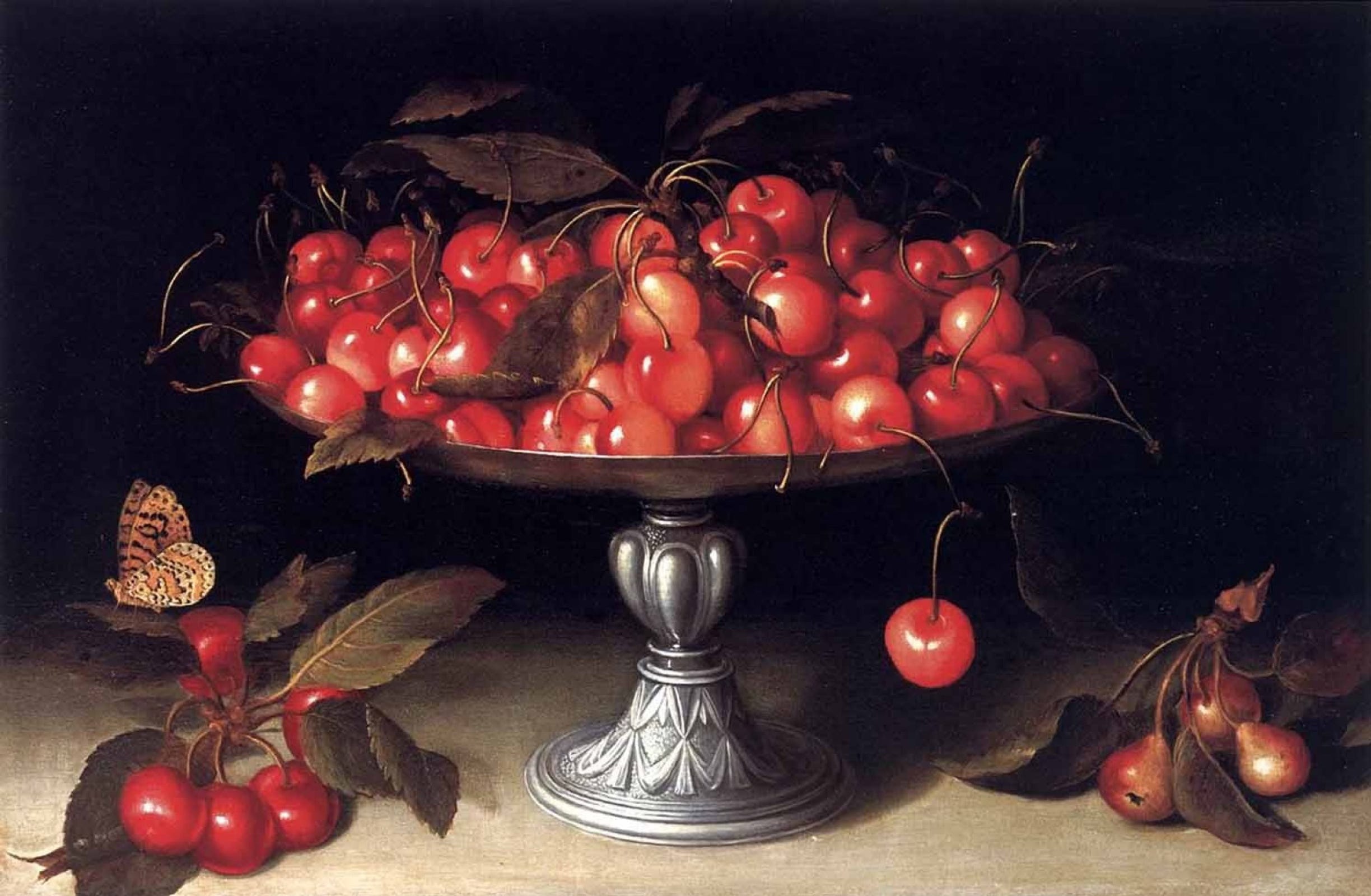
25 Random (and Delightful) Facts about Cherries
1. Ancient Roots
Wild cherries date back thousands of years, most likely originating in the region between the Black and Caspian Seas in Asia Minor.
2. Early Cultivation
Cherries are one of the first cultivated fruits, grown for over 2,000 years.
3. Something Good?
English colonists brought cherries to North America in the 1600s.
4. Family Ties
Cherries are a stone fruit that belong to the rose family. They are related to plums, and more distantly, to peaches and nectarines.
5. Scientific Name
The scientific name for cherries is Prunus avium, which translates to “birds’ plum tree.”
6. Etymology
The word cherry originates from the Old North French word cherise. English speakers assumed the ending was plural (cherries), so they created the singular form cherry (spelled chery in Middle English).
7. Variety
There are over 1,000 varieties of cherries around the world.
8. Bountiful Trees
The average cherry tree has 7,000 cherries.
9. Modern Harvesting
Until recently, cherries were picked by hand, a process that took hours. Now, mechanical tree shakers do the job in seven seconds per tree. (But the intense process shortens a tree’s life by seven years).
10. No Ripening After Picking
Cherries don’t ripen once picked.
11. Water Content
A freshly picked cherry is about 80% water.
12. Colourful Antioxidants
The ruby-red colour of cherries comes from anthocyanin, a powerful antioxidant.
13. Size and Sweetness
Bigger cherries usually have higher sugar content and are sweeter.
14. Health Benefits
Cherries reduce inflammation, strengthen the immune system and help fight diseases like gout and arthritis.
15. Natural Melatonin
Cherries are one of the few natural sources for melatonin.
16. Cherry Wood
Cherry wood has a fine structure and is often used in the manufacture of furniture and jewellery making.
17. Celtic Traditions
Traditional Celtic instruments and objects, like bagpipes and the quaich, are often made from cherry wood.
18. Musical Heritage
Cherry wood is also used to make saz, a long-necked lute popular in Turkish, Balkan, Middle Eastern, and Central Asian folk music.
19. Competitive Pit Spitting
Cherry pit spitting is a competitive sport in some parts of the world. Participants use their tongues and cheeks to build pressure before launching the pits with impressive force.The Guinness World Record stands at over 28 metres.
20. Edible Blossoms
Cherry blossoms are edible, which makes Sylvia Plath’s famous blunder in The Bell Jar less outrageous than sounds:
“The first time I saw a fingerbowl was at the home of my benefactress. [...] The water had a few cherry blossoms in it, and I thought it must be some clear sort of Japanese after-dinner soup and ate every bit of it, including the crisp little blossoms.”
21. Memory Experiment
Neurologists used the scent of cherry blossoms in an experiment on mice to prove that a memory’s effects could be passed down for multiple generations.
22. To Cherry Pick
To cherry pick means to select the best or most desirable items. In law, it means to deliberately suppress evidence, or present only the ideas that support a pre-existing narrative.
23. To Pop a Cherry
To pop a cherry means to do something for the first time. The more sexually explicit meaning — “to lose one’s virginity” — is more recent. To lose one’s cherry dates back to the 1920s, used for both men and women, while popping one’s cherry emerged in the 1970s and is mainly used for women.
24. In Cherry Condition
In cherry condition means in perfect or like-new condition.
25. A Bite at the Cherry
To take a bite at the cherry means to have an opportunity to do something.
A second bite at the cherry is a second chance.
To make two bites at the cherry (usually in negative contexts) means to behave with affected nicety or to divide a task unnecessarily.
A few more for the road from comments I got on my previous posts.
1. Ukrainian Cherries
“In Ukrainian sweet cherries are черешні and sour ones are вишні - and also both symbolic and political as Russians have stolen cherries from Melitopol. After occupation, they forcibly took over the company which had made the Melitopol cherry into a UNESCO heritage protected fruit and transferred it to Russian ownership.” (F.S.)
2. Washington Trees
The gifted cherry trees in Washington are quite spectacular when in blossom! (W.T.)
3. Sour Cherry Jam
“Every year I make sour cherry and red currant jam. You need the currants for the natural pectin. The cherries and currants tend to come into the market here [in Toronto] at different times, so I often have to pit and freeze the cherries to be ready when the currants appear. But there’s nothing better. Fresh bread and cherry jam? (L.K.)
4. Le temps de cerises
“I find it easy to love and admire cherries. Dans le temps des cerises il faut manger... “ (R.T.)
Here is Yves Montand singing Le temps de cerises live in 1974.
And a final cherry on top:
Sevdalinka, a traditional form of urban singing from Bosnia and Herzegovina, where a singer tells a story, was inscribed in 2024 on the Representative List of the Intangible Cultural Heritage of Humanity. The singer performs a capella or accompanied by an instrument, often the saz. (see 18 above)
Damir Imamović, an award-winning and internationally recognised musician. who sings and plays sevdah (traditional Bosnian music) on the saz, recently published a book titled Saz in Sarajevo. Listen to his ode to the Bosnian mountains and their snowy peaks.
I recently went to Damir’s concert and it was quite emotional. Yes, sevdalinka can touch you deeply, but I think it was more because I have a soft spot for Damir. He lived on my street in Sarajevo, and I knew some members of his family. He was just a child during the war but already an aspiring artist. One day, his father came to ask me if I would translate a poem he’d written into English, probably for a poetry contest. It was a lovely poem, and I was delighted to help. There are other connections, but I’ll end here, with this sweet wartime memory.
Thank you for reading.
Peace,
Amela
Well, there are many facts there that I definitely did not know! A great collection of information. So interesting that the mechanical harvesting reduces the life span of the trees by so much, sad really!
I was about to post a pic of some beautiful cherries I saw today at the market, when this popped on my feed :) a great read as usual. I love cherries! PS I thought the dessert in the first pic was a zeppola.