
Asparagus Tales
Is there a connection between childhood, food and soul?

This week, I bring you a few asparagus-related stories. Some are lesser known but deeply resonant. Asparagus has been celebrated for millennia, often laden with erotic symbolism in mythology and art. The literature on this vegetable is staggering, enough for several posts; here, I’ve chosen just a fraction to start the conversation.
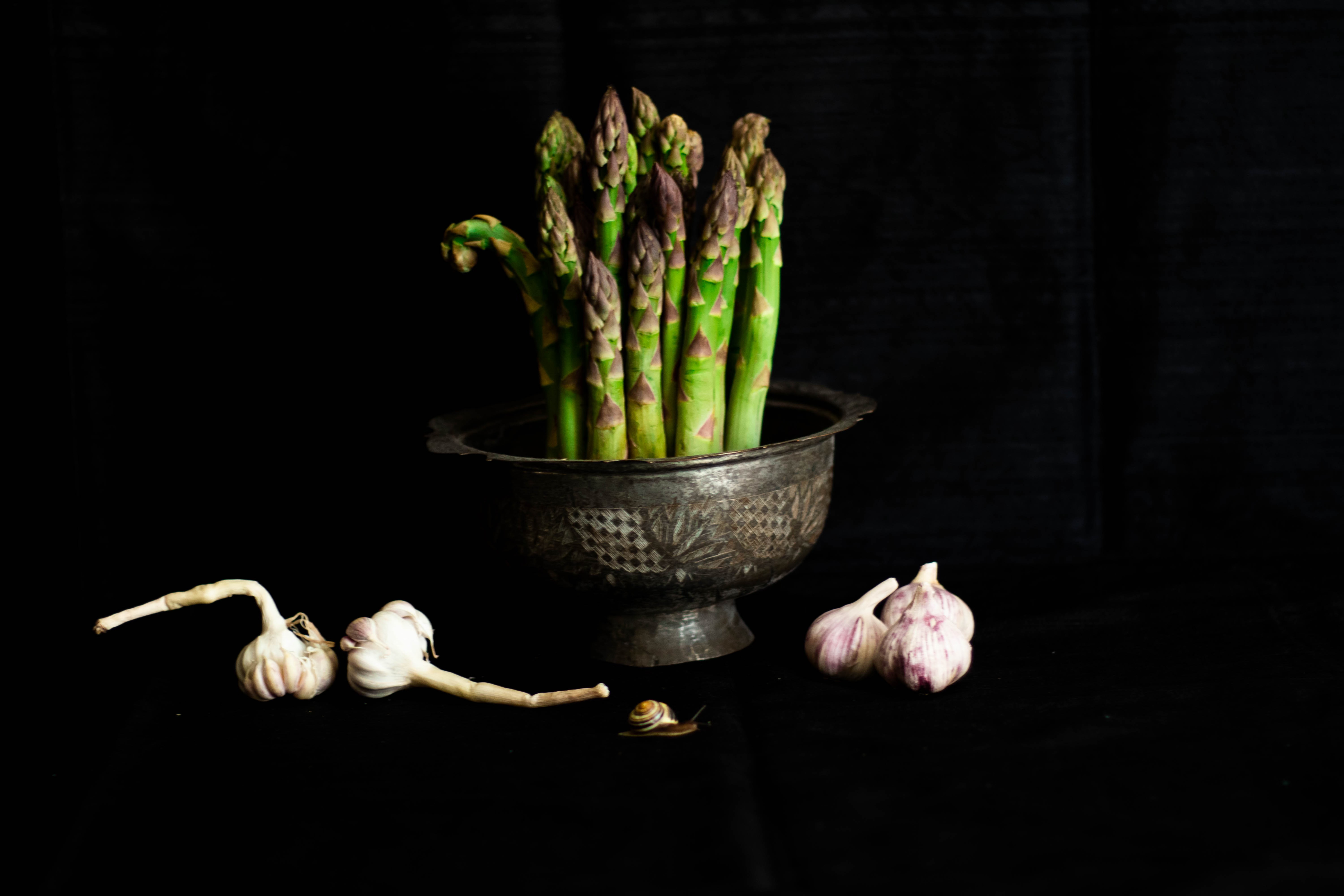
Gertrude Stein, in the “Food” section of her avant-garde book Tender Buttons (1914), includes this very short enigmatic poem:
“Asparagus in a lean in a lean is to hot. This makes it art and it is wet weather wet weather wet.”
Foraging for Wild Asparagus in Dalmatia
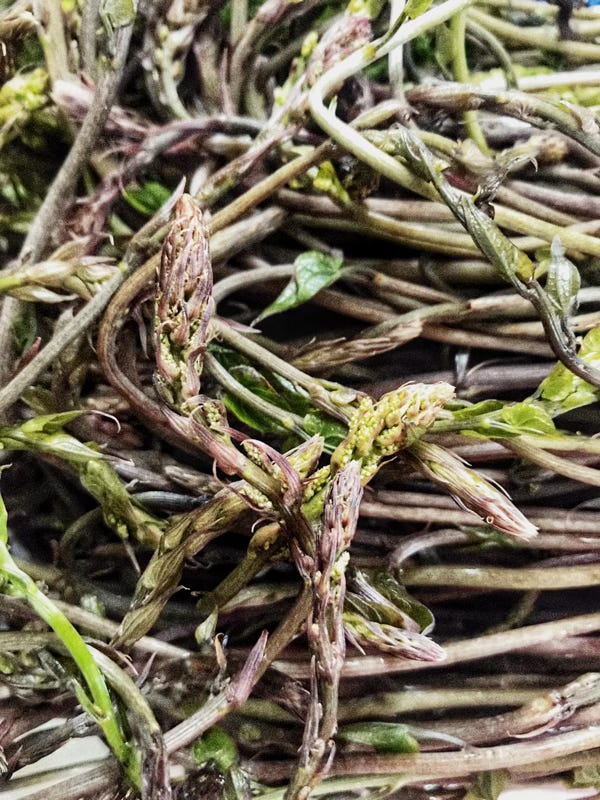
It’s wild asparagus season in Dalmatia, and foraging is in full swing. But the plant often eludes inexperienced foragers, who may mistake it for black bryony, a similar looking and tasting, poisonous plant. For a brief period, black bryony’s young shoots are edible, but they must be boiled (never eaten raw, as you might do with young asparagus). Some even recommend boiling them twice, discarding the first water.
At the market, a tiny bunch costs four-five Euros.
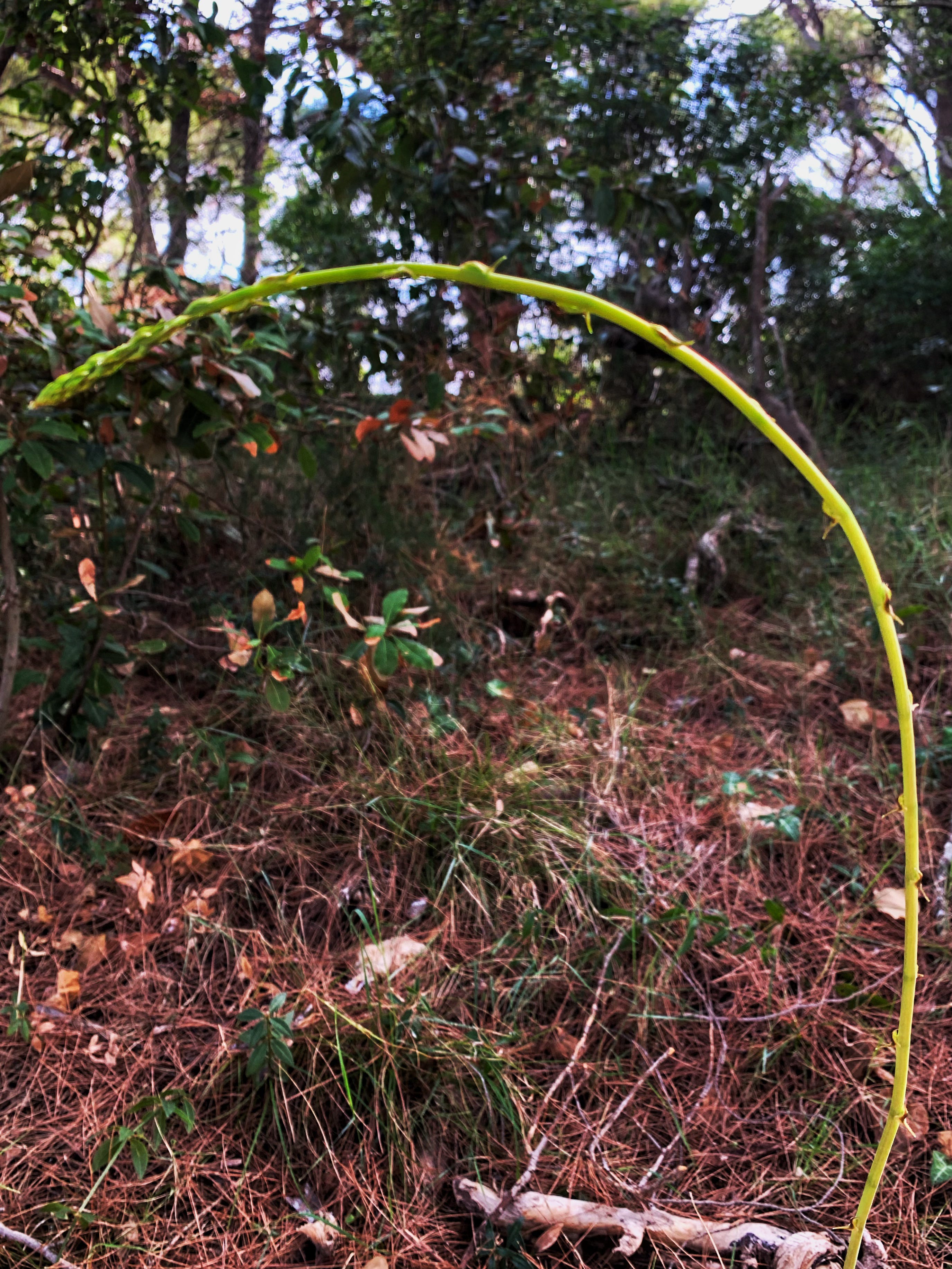
As a child, I spent summers in Dubrovnik with my grandparents. One year, I stayed with them while in first grade, recovering from illness with the help of sea air. Behind my school, just a few hundred meters from their house, was a patch of wild greenery – brambles and thickets, where we picked wild blackberries in summer. But my most vivid memory is the winter I first tasted raw wild asparagus, plucked from among those same bushes where we played.
Ravishing, bitter, tart, tender and delicious, and tasting of freedom. These are memories of a childhood that was idyllic, blissful, sun-drenched, magical, adventurous, and joyous. It’s not nostalgia speaking; it’s simply true that some childhoods are carefree and filled with love. Such childhoods create a well within you, a source of strength in tough times. My children had a similar experience, giving them a fountain that didn’t run dry in dark times when their childhoods were cut short by war.
A child munching on wild asparagus? Maybe unusual, but there was something about wild grasses, blackberries, mollusks and seagrass – discovering and choosing to eat them – that brought genuine pleasure. To this day this, I am drawn to try edible plants raw, because cooking can change their taste. Since that first encounter, wild asparagus has remained one of my most anticipated delicacies I look forward to at this time of year.
For years, when my parents lived in Dubrovnik, my mother would freeze wild asparagus for me. It was always one of my first treats upon arriving.
The Ancients and Their Love for Asparagus
Perhaps I’m an old soul without knowing it. The ancients certainly loved asparagus.
Marcus Valerius Martialis (Martial), the 1st century Latin poet, praised wild asparagus in Epigrams in which he satirises city life and the scandalous activities of his acquaintances, and romanticises his provincial upbringing. “The asparagus with tender thorns that grows in the marshes of Ravenna will not be as tasty as the wild asparagus.” (For Latin scholars, it is important to note that Martial’s Epigrams are also a rich source of obscenities.).
Asparagus grows in dense, evergreen bushes, its top part is a gourmet’s dream. Cultivated for thousands of years, it was a staple in the diets of ancient Egyptians and Mesopotamians, and highly prized by Greeks and Romans. Roman villas and Pompeian frescoes often depict bunches of asparagus.
One story even credits Caesar with the maxim De gustibus non est disputandum (There’s no accounting for taste) after devouring a plate of asparagus with butter, a preparation his generals found disgusting, as butter was then used in Rome only for grooming.
Another Roman tale involves the phrase Velocius quam asparagi conquantur! (Faster than you can cook asparagus!). Some attribute it to Augustus, a well-known asparagus lover, who allegedly created a special military unit, called the Asparagus Fleet, to source the best spears across the empire. The phrase reflects the vegetable’s delicate nature: it’s so thin and tender and should be cooked quickly in as little water as possible.
And yes, Apicius did feature asparagus in his seminal cookbook De Re Coquinaria (On Cooking).
Still Life with Asparagus, Manet & Ernst
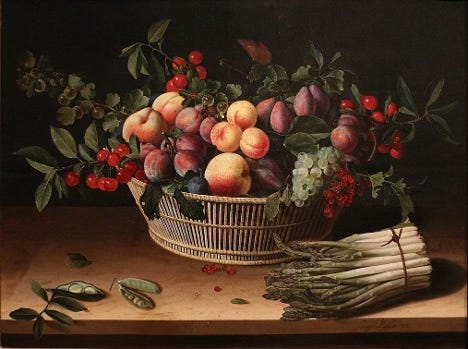
Art history is full of depictions of asparagus, mostly in still life paintings by various artists, sometimes alone, sometimes in company of other edibles.
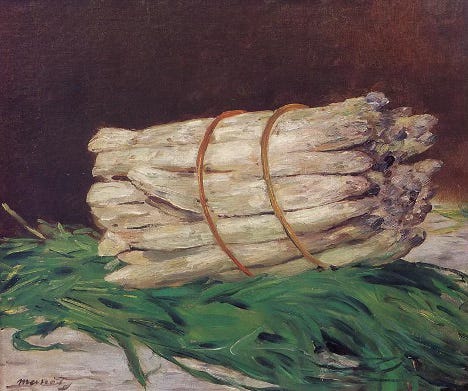
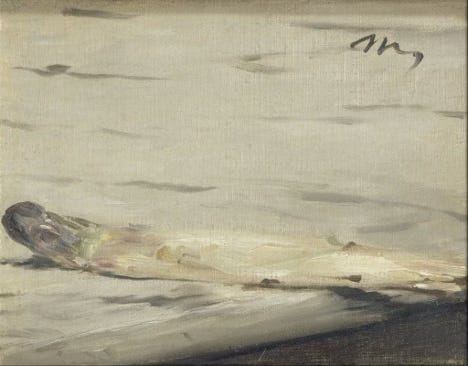
In 1880, Édouard Manet painted “A Bunch of Asparagus” for his collector, the banker Charles Ephrussi, charging eight hundred francs. Ephrussi generously gave him a thousand instead, so the grateful Manet painted “The Asparagus,” and sent it with a note: “One was missing from your bouquet.”
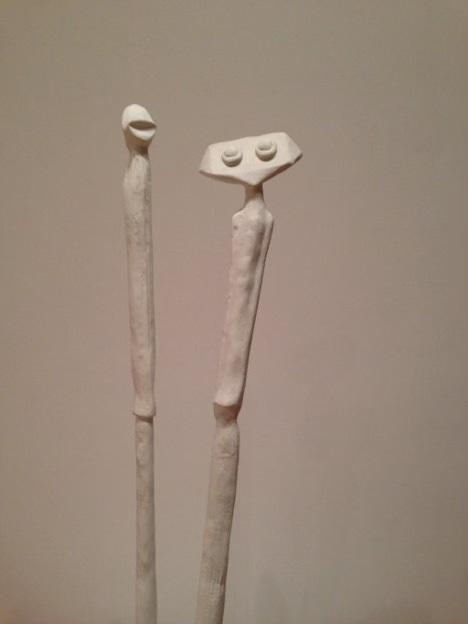
Max Ernst’s “Asperges de la Lune” (Lunar Asparagus), conceived in 1935 and realised as wooden and metal sculptures in 1973, is a surreal hybrid of the vegetable and the human form.
Asparagus and the Immortality of the Soul
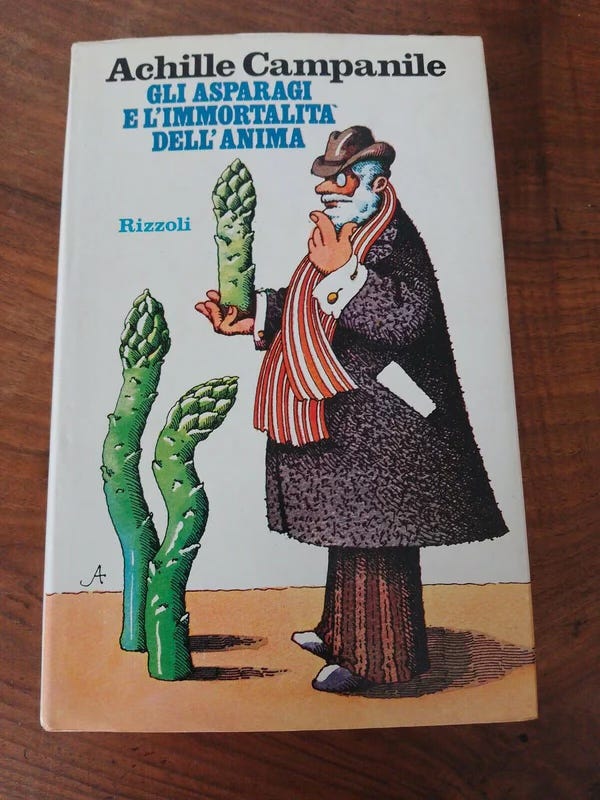
Achille Campanile, an Italian writer known for his surreal humor, wrote a collection of stories Asparagi e immortalita dell’anima (Asparagus and the Immortality of the Soul), published in 1983. He started writing the 38 stories in 1925, including the title story. In it, Campanile debates the connection between the two.
“There is no connection between asparagus and the immortality of the soul. Those are greens belonging to the asparagus family, I believe, excellent when boiled and dressed with oil, vinegar, salt, and pepper. Some prefer lemon to vinegar; also excellent is asparagus cooked with butter and dressed with Parmesan cheese. Some put a fried egg on top, and it goes very well. The immortality of the soul, on the other hand, is a question; a question, it must be added, that has been troubling philosophers’ minds for centuries. Moreover, asparagus is eaten, while the immortality of the soul is not.”
Campanile’s arguments spiral in this vein, even at some point suggesting that there indeed might be a connection because “if the soul were not immortal, nothing would remain of us; whereas, being immortal, much remains, in fact, the best part of us remains. Even of asparagus, unfortunately, much remains; but compared to us, not the best and noblest part. On the contrary, the worst remains, the stalk.” But then he shuts down this argument stating that a good part of the artichoke remains, too, so his thesis cannot be applied to asparagus only.
He ultimately concludes there’s no connection. But the journey is delightful and hilarious.
This is something I do all the time. I debate my own ideas, sometimes aloud, sometimes on paper. My notebook margins are full of scribbled comments: “Really? Where are you going with this?” Or “Such a weak argument! Can’t you do better?” I guess, if Campanile can turn this kind of musings into stories, so can I.
Magic & Asparamancy
Asparagus is believed to enhance intuition, promote spiritual growth, and attract abundance. Its green spears symbolise fertility, renewal, and growth, aligning with earth’s natural cycles. In witchcraft, asparagus is used in potions, rituals and spells. It is believed to amplify psychic abilities and protect against negative energy. It is also associated with healing and purification.
Asparamancy is the practice of reading the future using asparagus. The future can be predicted by observing the shapes spears make when tossed onto a surface.
A Polite Swear Word and a Frittata
In Spanish, ¡Vete a freír a espárragos! (literally: Go fry asparagus!”) means “Get lost!” or “Piss off!”
What I’ll do now is get lost and make an asparagus frittata for lunch, to celebrate finishing this post. I picked a few asparagus stalks, just enough for a light meal. I’ll remove the woody bottoms, save them for stock, and briefly blanch the tops (ignoring my own advice to boil them twice). They are young so I trust that they (and I) will be fine. I’ll mix a spoonful or two of sour cream with two eggs, add salt and pepper, pour the mix into a greased pan, add the blanched spears on top, and bake for 20-25 minutes. It’s my favourite way to prepare them. Try it!
Peace,
Amela
Great writing as always! I am now craving some asparagus. The cover of that book is amazing!!
What a soulful read. Your kids are lucky that you provided them the fountain...thay will never run dry in dark times. I am the one of those who puts asparagus on fried eggs and love them.
I never knew I could use asparagus to swear,I might use it . Haha. Asparagus for future telling, I am so intrigued..